Get 10% off your first booking with coupon WINTER10
Historic woodland gardens · Westbourne

Upper Gardens

The most untamed section of Bournemouth's Victorian pleasure gardens, featuring exotic trees, a Gothic water tower and a boardwalk route to Coy Pond.

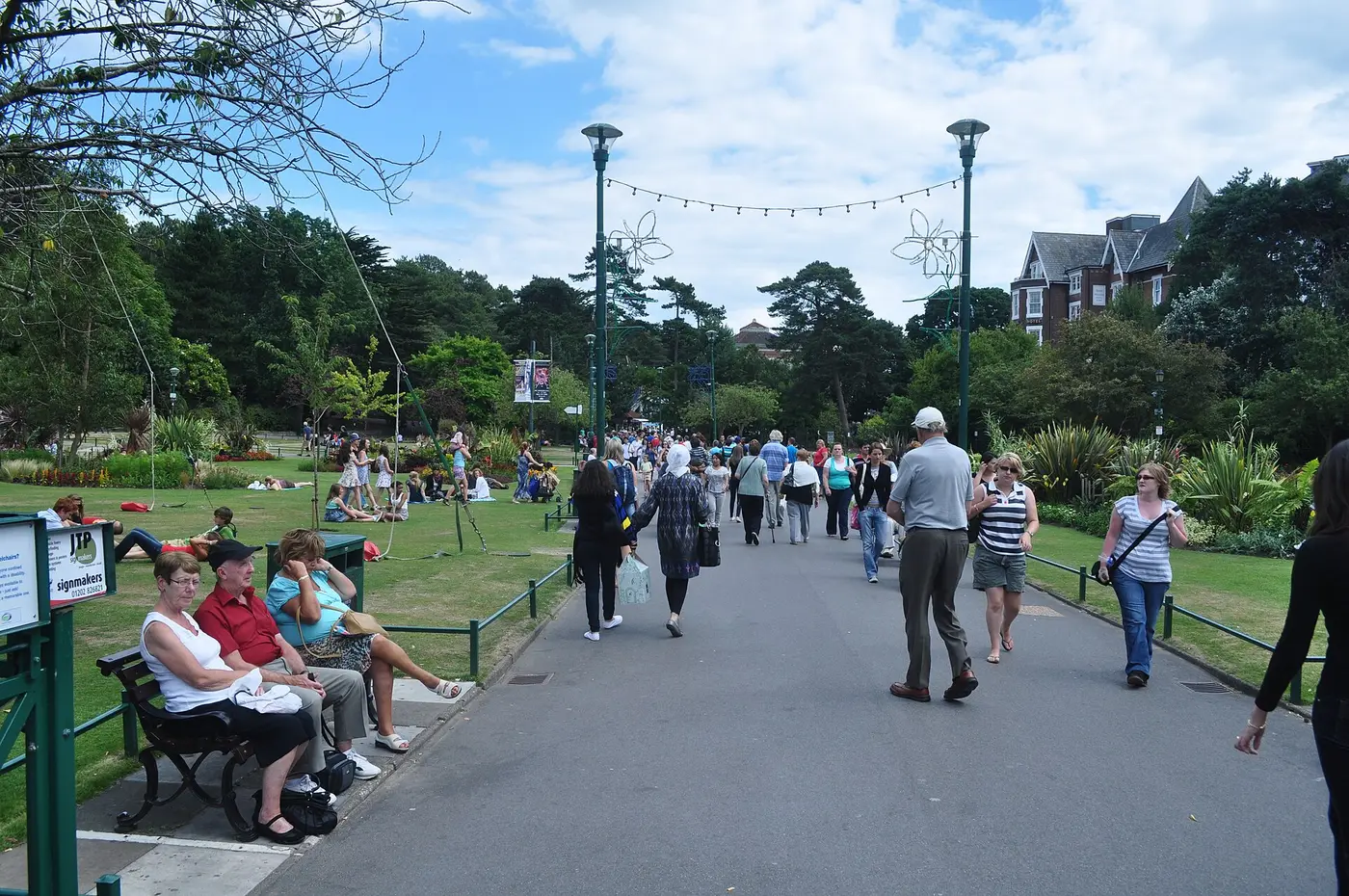
Of Bournemouth's celebrated Victorian pleasure gardens, the Upper Gardens sit furthest from the coast, and by some distance are the wildest stretch. While the Central and Lower Gardens near the seafront read as manicured town parks, the Upper Gardens turn into something closer to a woodland trail, tracking the Bourne stream up through Westbourne towards Coy Pond.

History

Leased initially to the Durrant family as a private garden from the 1860s, the site was notoriously boggy, closer to marsh than garden, and shingle and broken pottery from a nearby clay works had to be used for drainage before any real planting could start. Once the lease passed to Bournemouth Council, the Bournemouth Improvement Commissioners spent 1871 to 1889 converting the valley into a public pleasure ground, introducing the earliest of its exotic trees. The Upper Gardens, together with the Central and Lower Gardens, now carry Grade II Park and Garden registration as part of the broader scheme that architect Decimus Burton first advised on while Bournemouth was developing into a Victorian health resort.

What to see & do

Trees here are loosely arranged into European, Asian and North American groupings, rhododendrons, oaks and silver birches; Japanese acers, bamboo and Persian ironwoods; pines and a towering Giant Redwood reputed to be among the country's largest. Red ornamental bridges span the Bourne stream, and a Gothic-style, red-brick water tower built between 1883 and 1903, originally meant to pump water to a fountain via a waterwheel, still stands as a landmark, now serving roosting bats rather than any mechanical purpose. Further along, boardwalks carry the path over boggy ground to ornamental rockeries and on towards Coy Pond, where the gardens reach the Poole boundary.

Visiting

Entry to the Upper Gardens is free and open access, and they combine easily with a longer walk along the full gardens chain. Lower paths are paved and easy underfoot, but expect boggier, less formal terrain, boardwalks rather than tarmac, as you near the rockery and Coy Pond end, which can prove awkward for wheelchairs and pushchairs.

They join directly onto the Central Gardens, which lead down in turn to the Lower Gardens and the pier. For further green spaces and walking routes around the bay, see our guide to things to do in Bournemouth.
Highlights

  • The most natural-feeling, north-western section of Bournemouth's registered Victorian pleasure gardens
  • Trees grouped into European, Asian and North American areas, including a Giant Redwood said to rank among the country's largest
  • A Gothic-style red-brick water tower (1883 to 1903), originally built to pump water to an ornamental fountain, now home to roosting bats
  • Boardwalk paths cross marshy ground towards ornamental rockeries and Coy Pond, right on the Westbourne and Poole boundary
  • Open access year-round at no cost, forming the link between the Central Gardens and Coy Pond Gardens
Free entryBoardwalk pathsHistoric water towerExotic tree collectionRed footbridgesCoy Pond nature trail
Common questions

Upper Gardens good to know

Whereabouts are the Upper Gardens in Bournemouth?

The Upper Gardens form the north-western section of Bournemouth's chain of Victorian pleasure gardens, tracing the Bourne stream through Westbourne towards Coy Pond, near Surrey Road (postcode BH4 9HW). They pick up where the Central Gardens leave off, which in turn connect back to the town centre and seafront.

How do the Upper Gardens differ from the Central and Lower Gardens?

Compared with the formal Central and Lower Gardens nearer the coast, the Upper Gardens feel markedly wilder and less manicured. Trees are loosely grouped by continent, European, Asian and North American species, and the paths turn into boardwalks over boggy ground as they reach the rockeries and Coy Pond on the Westbourne and Poole boundary.

What's the story behind the water tower in the Upper Gardens?

It's a Gothic-style, red-brick tower constructed between 1883 and 1903, built originally to house a waterwheel that pumped water from the Bourne stream to an ornamental fountain. That function has long since ended, and bats now roost there instead.

Is there a charge to enter the Upper Gardens?

No, admission is free, as it is throughout Bournemouth's pleasure gardens, with open access at all times.

Can wheelchairs and pushchairs get around the Upper Gardens?

The lower paved sections are straightforward to navigate, but towards the rockeries and Coy Pond at the top, paths become unpaved and can flood, which restricts wheelchair access in that stretch.

How far back do the Upper Gardens date?

The Durrant family originally leased the land as a private garden from the 1860s, before it passed to Bournemouth Council, and the Bournemouth Improvement Commissioners turned the boggy marsh into a public garden between 1871 and 1889. Together with the Central and Lower Gardens, they hold Grade II Park and Garden registration, first laid out following advice from architect Decimus Burton.

Is Upper Gardens your business?

Claim it to keep the opening times, description and facilities on this page accurate. Free, and it takes a minute. We check every claim by hand.

Already claimed it? Sign in. Not listed at all? Add your business.

Planning your visit?

Stay a few minutes from the sand

Flexiestays runs serviced apartments and aparthotels across Bournemouth. Book direct for the best rate, whether you are here for a weekend, a week or the whole season.

Book direct with Flexiestays