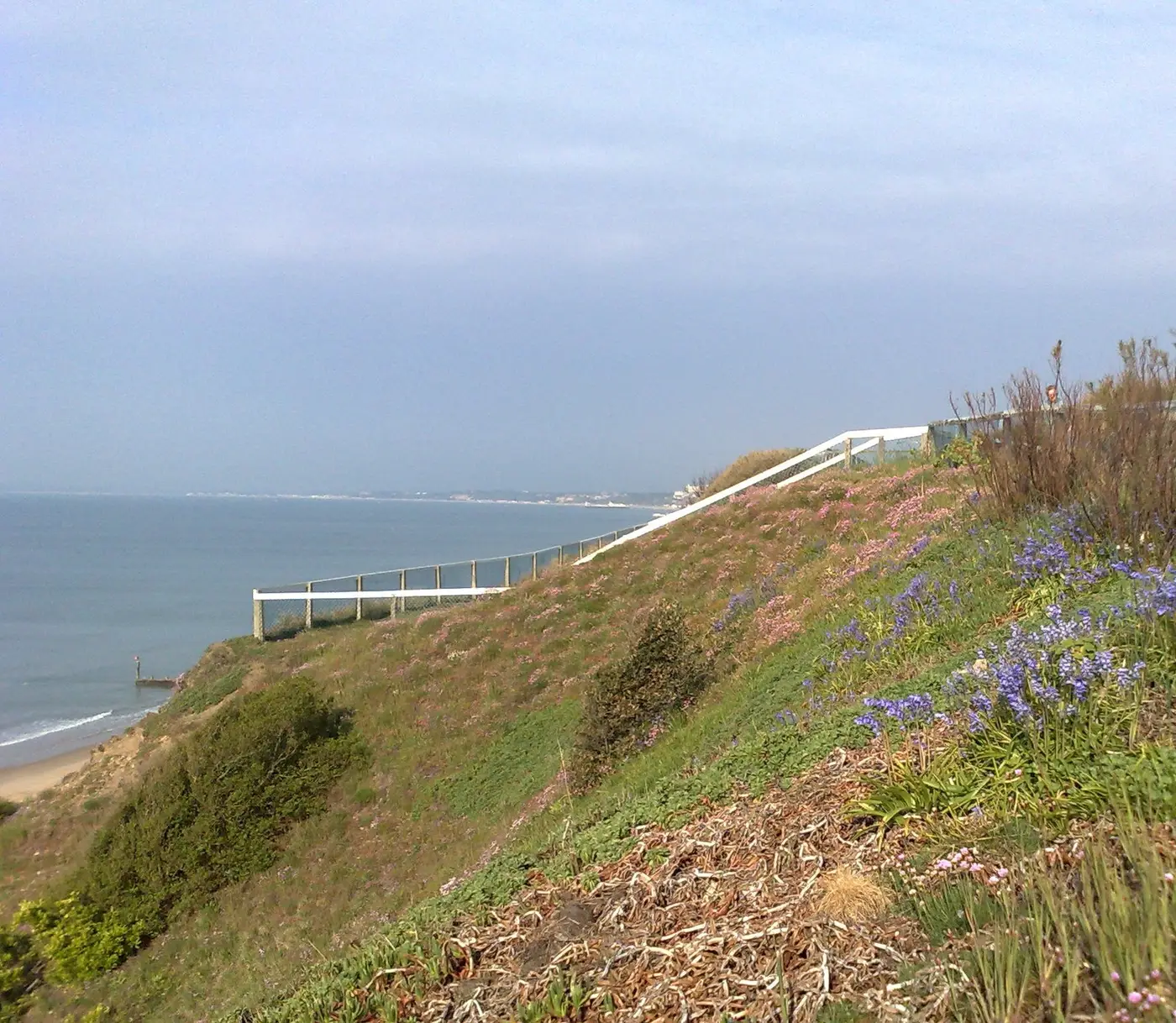
Bournemouth beaches are what bring most people here in the first place: seven unbroken miles of gently shelving golden sand, with cliffs and wooded chines behind and a promenade that can be walked from one end to the other. There is no headland or river mouth to interrupt the sand, so it is easy to assume every stretch is the same. The sand is. Almost everything else changes as you travel east, from quiet, tree-lined chines at the western end, through the pier and its amusements, to the surf scene at Boscombe and the easygoing local beaches of Southbourne. Lifeguard seasons, dog rules and facilities all differ from one stretch to the next, which is why it pays to choose a beach rather than simply take the nearest path down.
Here they are in order, west to east.
Alum Chine, the quiet western end
Alum Chine Beach is the most westerly and the calmest of the main beaches. You reach it on foot through a wooded ravine below the West Cliff, crossing a footbridge on the way down, and the subtropical Alum Chine gardens sit directly behind the sand. It suits families who want space, walkers and swimmers who would rather not share the shore with day-trip crowds.
There are public toilets, a beach café, colourful beach huts and a pirate-ship play park that keeps small children busy for hours. RNLI lifeguards patrol in summer, usually from around May to September, and the sand slopes gently into shallow water. Dogs follow the seasonal pattern: the central beaches close to them from roughly May to September, while designated stretches further west stay open all year, so read the signs at the top of the chine. Clifftop and roadside car parking around the West Cliff and Westbourne fills early in warm weather, and arriving in the morning or walking down from town is easier.
Durley Chine, the best equipped
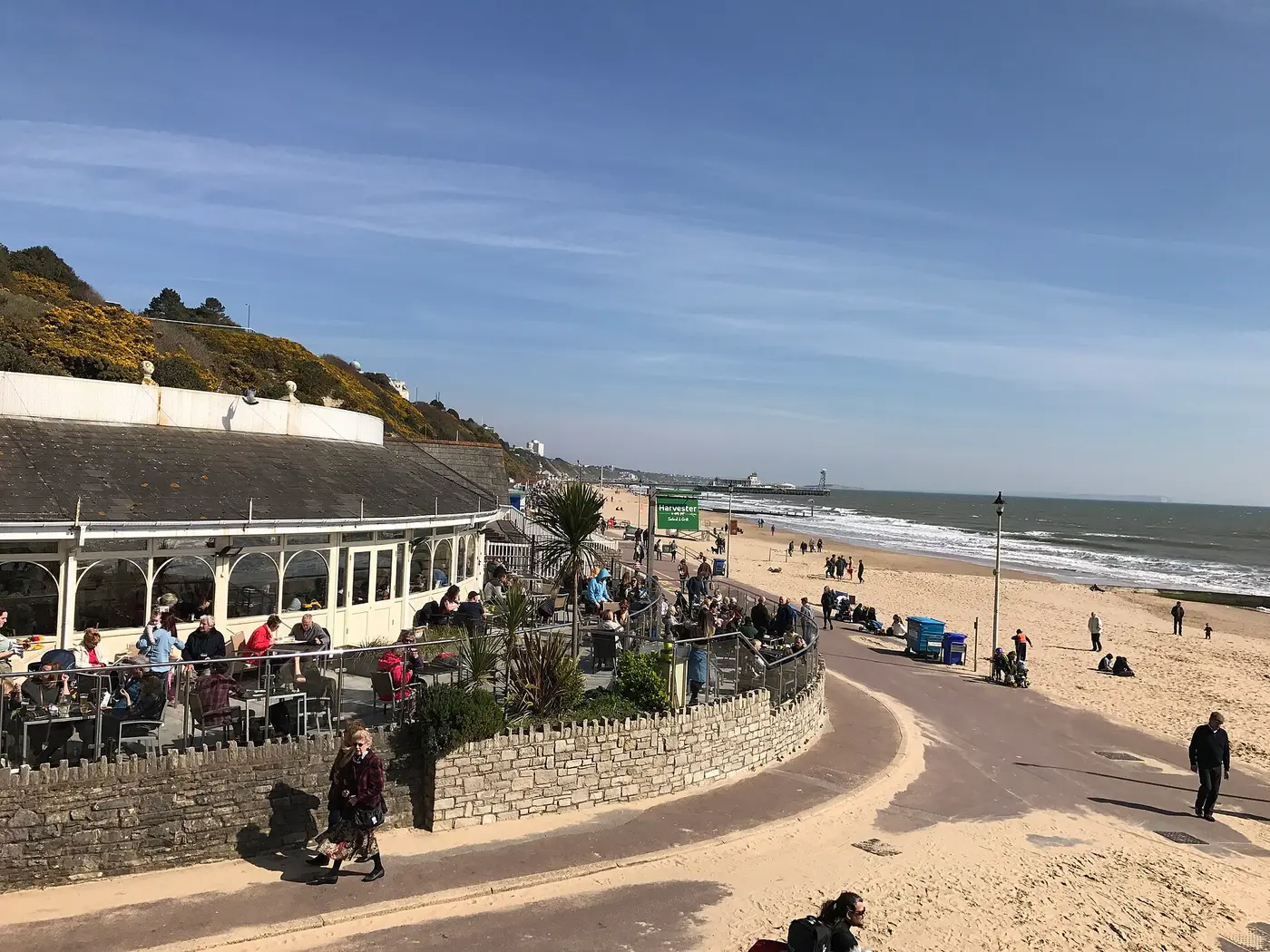
Durley Chine Beach is the practical family choice. Its award-winning eco beach hub, a low-carbon pavilion, houses a café, showers, toilets and changing rooms, and beach huts line the promenade. Step-free ramps and level paths make it one of the easiest beaches to reach with a buggy or wheelchair, and beach wheelchairs can be booked along the seafront.
The sand is broad and shelves slowly, RNLI lifeguards patrol through the summer, and the beach is listed with Blue Flag water quality, although awards are reassessed each year, so check the current status. Durley Chine sits among the central beaches, where dogs are typically kept off from roughly May to September. It is about a 15-minute walk from the town centre, either through the gardens and along the promenade from the pier, or across the West Cliff and down the zig-zag paths and cliff lift. Clifftop parking is limited on sunny days.
Bournemouth Beach, beside the pier
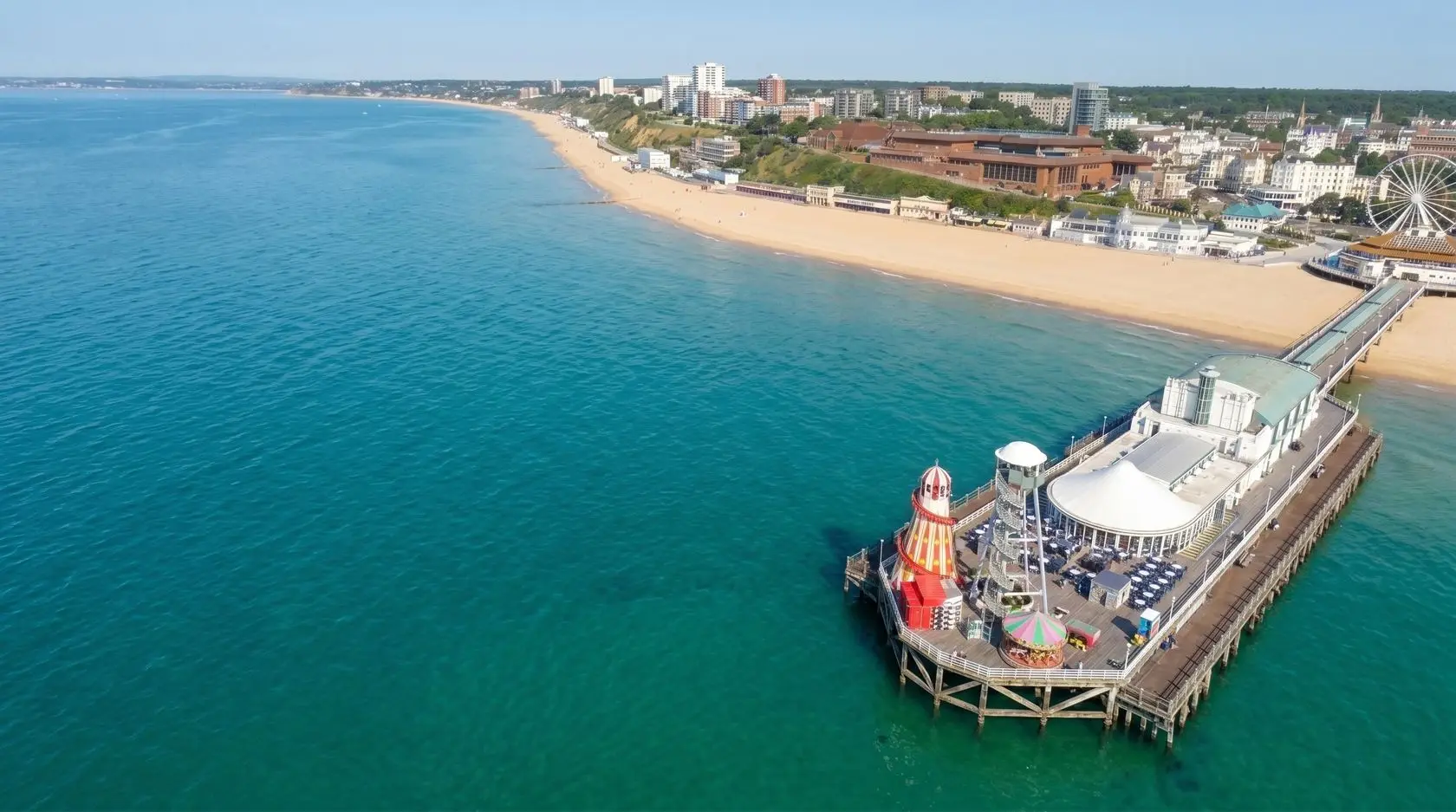
Bournemouth Beach is the resort's centrepiece, the wide band of sand below the pier and the scene on most postcards. It is the busiest of the beaches, the best served and the easiest to reach: the Lower Gardens, the Oceanarium and the pier stand right behind it, and the walk downhill from the town centre takes roughly ten minutes.
Expect public toilets, cafés, ice-cream kiosks, deckchair and beach-hut hire, amusements and the PierZip zip line in season. Ramps lead down to the sand, and beach wheelchairs can be reserved. RNLI lifeguards mark a flagged swimming area through the summer, and the beach holds both Blue Flag and Seaside Award recognition. The main resort beach is closed to dogs from roughly May to September, then open to them for the rest of the year. In high summer it is full of holiday noise, yet wide enough that you can usually find room; out of season it belongs to walkers. Seafront car parks fill early, so aim for the morning.
Boscombe, for watersports
Boscombe Beach is the active stretch. Surf schools teach lessons for all ages, and boards, wetsuits and stand-up paddleboards can be hired by the hour through the season. The restored Victorian pier, which opened in 1889, anchors the beach, and you can walk out along Boscombe Pier for nothing and look back across the bay. The mood is sociable and a little bohemian, with cafés, ice-cream kiosks, toilets and rows of colourful beach huts along the front.
RNLI lifeguards patrol in summer; swim between the red-and-yellow flags, keep clear of the pier supports and take extra care on windy days. Dogs are banned near the pier from roughly May to September, but year-round dog-friendly sand lies a short walk east towards Fisherman's Walk and Southbourne. The promenade west to Bournemouth Pier takes about 30 to 40 minutes, and frequent buses link Boscombe with the town centre. Seafront and clifftop car parks fill quickly on warm days.
Fisherman's Walk, huts and a cliff lift
Fisherman's Walk Beach is where the coast turns residential and the pace drops. Rows of brightly painted beach huts rise towards wooded cliffs behind a flat promenade, and the gently shelving sand makes it a favourite with returning families and locals. The Fisherman's Walk cliff lift, a short funicular opened in 1935, carries passengers between the clifftop and the front, though it runs only seasonally, so confirm it is operating before you count on it. Otherwise the zig-zag paths lead down.
Facilities are modest: kiosks and refreshment points along the promenade, hireable council beach huts, and toilets and small shops on the clifftop around Southbourne. RNLI lifeguards patrol in summer. Dog rules differ by section and can change from year to year, so check the signs and council guidance. Clifftop and residential-street parking disappears early on warm days and weekends, and the bus or a walk avoids the circling.
Southbourne, the local beach
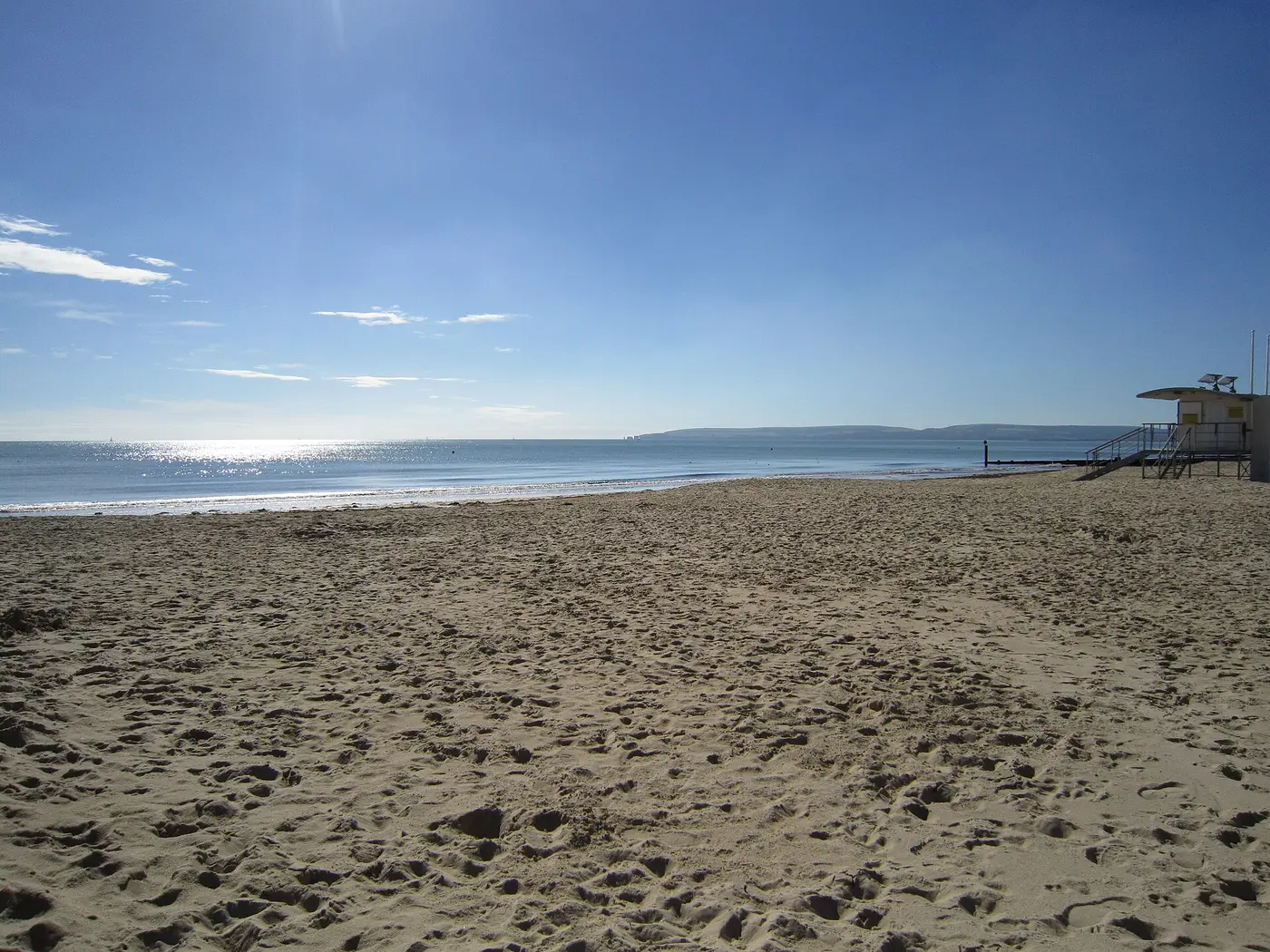
Southbourne Beach is the long, relaxed eastern end, below a leafy clifftop suburb, with open views along the shore towards Hengistbury Head and, on a clear day, the Isle of Wight. It draws more locals than visitors and stays calm even at the height of summer. Broad sand, a row of beach huts, seasonal cafés and kiosks, toilets and a smooth promenade for walking or cycling make up the setup. It is lower key than the town centre, so bring supplies for a long stay.
It is also the most generous beach for dogs, with year-round access near the eastern end towards Hengistbury Head, though some sections apply the seasonal ban from around May to September. RNLI lifeguards patrol through the main summer season. Zig-zag paths and gentle slopes lead down from the Overcliff Drive, and clifftop and street parking fills early at weekends. Hengistbury Head and its nature trails lie just beyond.
Choosing a beach by mood
For quiet, go to Alum Chine or Southbourne, the two furthest from the pier and the centre of town. For a family day with everything to hand, Durley Chine has the most complete facilities, while Alum Chine has the play park and a shallower, calmer feel. For surf lessons and paddleboards, Boscombe. For the classic bucket-and-spade scene with amusements and deckchairs, Bournemouth Beach beside the pier. For dogs in summer, head east: Southbourne and the stretches past Fisherman's Walk are the safest bet, with the western side of Alum Chine the other year-round option. Whichever you pick, start from the most convenient path down rather than the most famous name, because the promenade links them all.
The promenade and land train
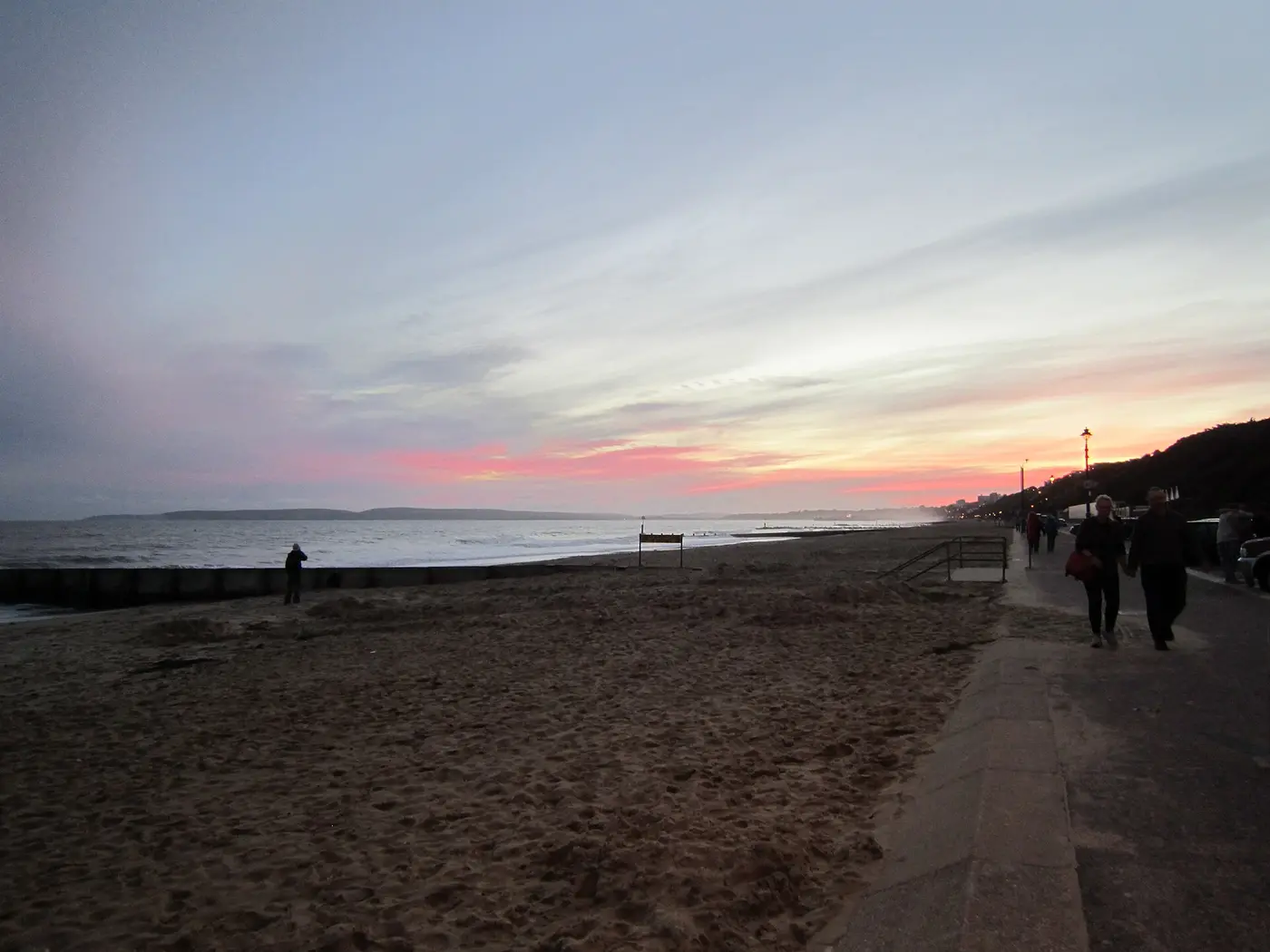
A flat, paved promenade runs the whole seven miles, which is why the separate beaches feel like a single one. Walking or cycling end to end is straightforward, and it is step-free, so it works well for buggies and wheelchairs. Clifftop paths and seasonal cliff lifts connect the beaches with the higher ground. If you would rather not walk, a seasonal land train runs from Bournemouth Pier west to Alum Chine and east to Boscombe Pier in the main season, and buses link Boscombe with the town centre. Timetables change, so check before you rely on either.
Safety on the sand
Lifeguard cover is seasonal and differs from beach to beach, so look at the signs on the day rather than assuming a beach is patrolled. Where lifeguards are on duty, swim between the red-and-yellow flags, watch children in the shallows, and heed any warning flags or local signs about currents and conditions. The sea here deepens slowly, which is reassuring, but tides and wind can change within a day. Check the tide before walking beneath the cliffs, and keep away from the piers' supports.
Beach safety
Where lifeguards are on duty, swim between the red-and-yellow flags. Check the tide before you walk beneath the cliffs, and keep inflatables out of the water whenever the orange windsock is flying: it signals an offshore wind that can carry them out to sea.
Where to stay for the beach
Staying close to the sand turns the beach into part of the daily routine rather than an outing, and the accommodation page lists places to stay across Bournemouth.